FREE CHINA MOVEMENT STATEMENT — September 9, 2026
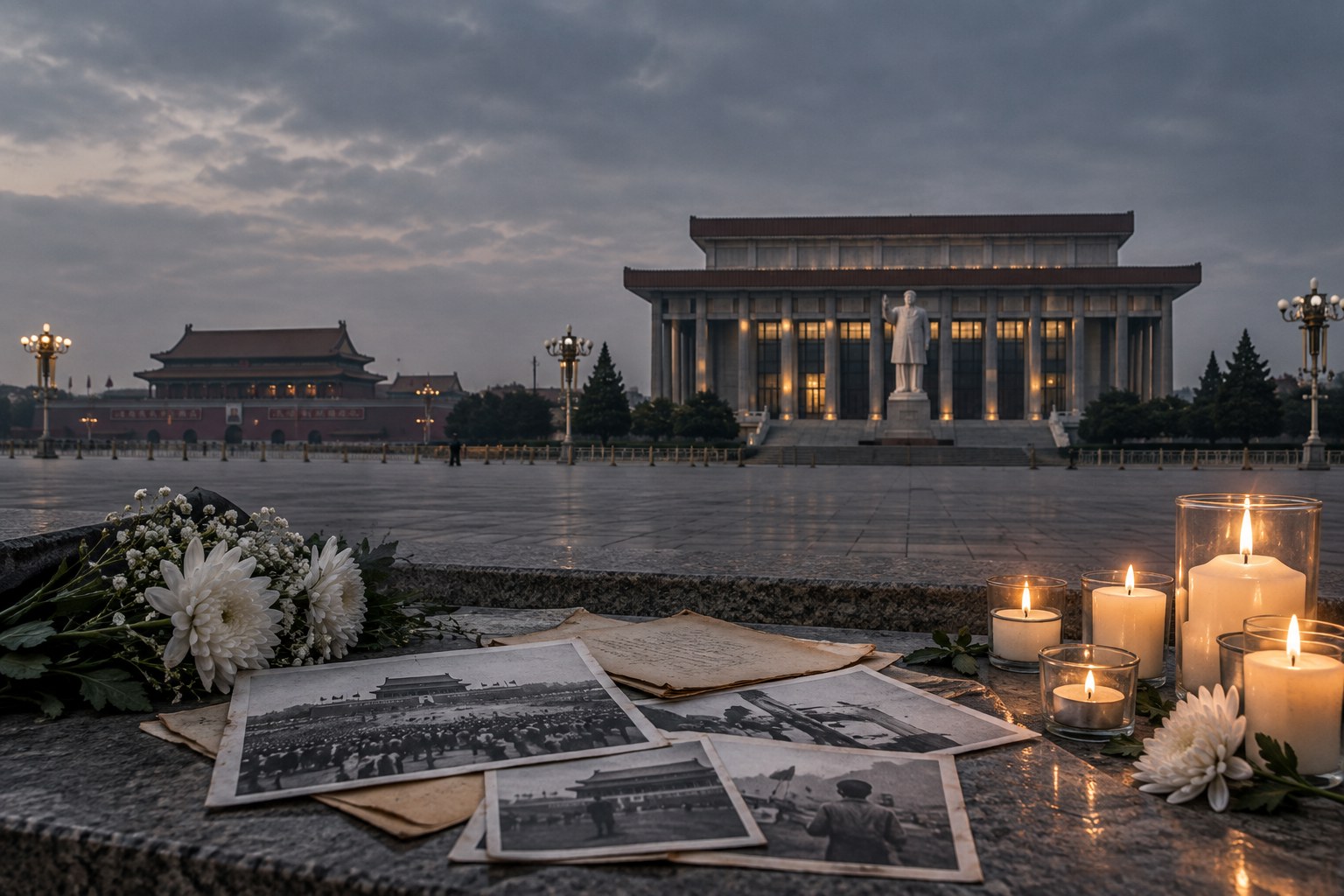
On the 50th anniversary of Mao Zedong’s death, the Free China Movement calls for a fundamental transformation of the Chairman Mao Memorial Hall in Tiananmen Square.
The building should no longer function principally as a shrine glorifying Mao Zedong. It should be renamed and rebuilt as a Hall of Shame and Historical Horror — a national memorial and historical institution documenting the victims of Mao-era political persecution, famine, forced labor, mass campaigns and political violence.
This proposal is not about erasing history. It is about replacing state-sponsored political veneration with historical evidence, remembrance and accountability.
The record that must be confronted
Any national reckoning must address the Great Leap Forward and the catastrophic famine that accompanied it; the Anti-Rightist Campaign and other political purges; the suppression of independent thought; arbitrary detention and forced labor; and the Cultural Revolution’s mass persecution, public humiliation, imprisonment, torture, killings and destruction of cultural and educational institutions.
Scholarly estimates differ, but Stanford research summarizes estimates of approximately 16.5 million to 30 million deaths in the 1958–1961 Great Famine. Stanford research on the Cultural Revolution estimates roughly 1.1 million to 1.6 million deaths during the upheaval and suppression campaigns and documents political persecution on a vast scale.
Honor those who resisted persecution
The transformed memorial should also preserve and honor the experiences of the many Chinese citizens, intellectuals, workers, students, officials, writers, religious believers, dissidents and families who, at different times, resisted political persecution, defended independent thought, documented abuses, protected victims or challenged Mao-era authoritarian practices and their continuation.
Their records belong in China’s public history. Survivor testimony, underground writing, private diaries, petitions, photographs, local records and other evidence should be preserved so future generations can understand not only how repression operated, but also how people defended human dignity under extraordinary pressure.
Accountability for those who enabled abuses
Historical accountability must also examine, on evidence, the institutions and individuals that enabled political campaigns, enforced persecution, concealed famine and mass suffering, participated in political violence or benefited from systems that denied basic rights. Responsibility should not be assigned collectively. A credible historical process must distinguish among policy-makers, active perpetrators, coerced participants, bystanders and people who attempted to protect victims.
Nor did the institutional legacy of Maoism simply disappear in 1976. Systems of censorship, political conformity, repression of dissent, personality-centered rule and concentration of unchecked power survived in different forms in mainland China. Institutions and later political leaders that preserved or revived such practices should be subject to the same evidence-based historical scrutiny.
What the new institution should contain
- A national victims’ memorial, identifying victims wherever reliable records permit.
- A Great Leap Forward and famine archive, preserving demographic evidence, local records, survivor testimony and policy documents.
- A Cultural Revolution museum, documenting persecution, factional violence, killings, imprisonment, forced denunciations and destruction of cultural heritage.
- A resistance and conscience archive, honoring people who opposed persecution, protected victims, preserved evidence or defended freedom of thought and conscience.
- An accountability archive, examining decision-making and institutional responsibility on the basis of documentary evidence.
- Open historical archives, allowing researchers, victims’ families and the public to investigate Mao-era campaigns without political censorship.
A future China should not replace one personality cult with another, nor should historical reckoning become collective punishment. The objective should be truth, remembrance, individual responsibility based on evidence, institutional reform and safeguards against recurrence.
Fifty years after Mao’s death, the victims deserve more than silence, and future generations deserve more than political mythology. China should preserve the evidence, remember those who suffered, recognize those who resisted repression and confront the institutions that made these catastrophes possible.
Sources and historical basis
- Reuters, September 9, 2026: reporting on the 50th anniversary and Mao’s continuing political legacy.
- Beijing Municipal Government / Beijing Daily, September 7, 2026: Chairman Mao Memorial Hall anniversary opening and reservation notice.
- Stanford King Center research on the Great Famine.
- Andrew G. Walder and Yang Su, Stanford University research on the Cultural Revolution’s human impact.