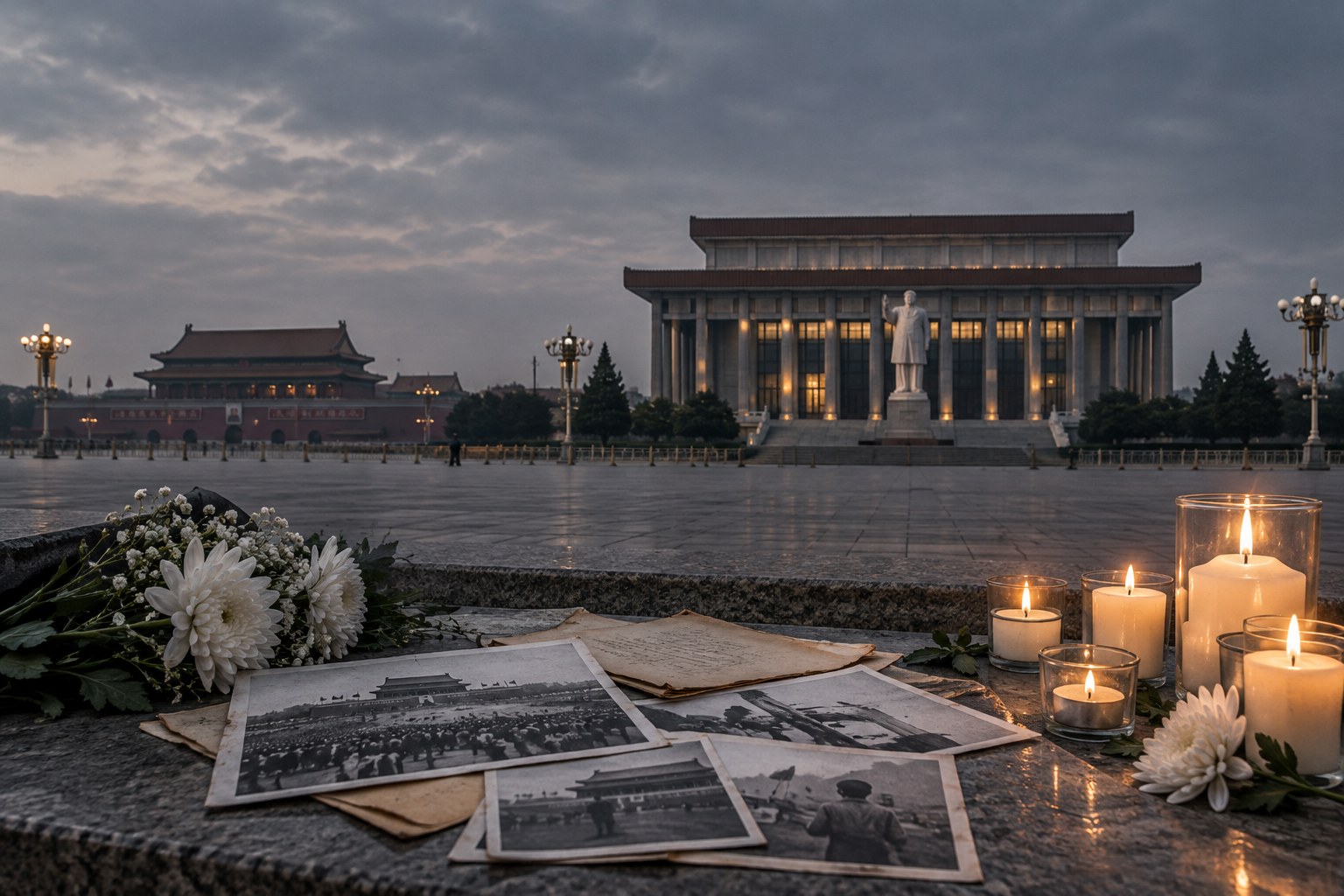
September 9, 2026 — The fiftieth anniversary of Mao Zedong’s death should not be treated merely as an anniversary of a former ruler. It should be a national reckoning with the enormous human cost of political campaigns carried out under his leadership and with the institutions and political habits that survived him.
The Great Leap Forward and ensuing famine killed millions. The Anti-Rightist Campaign destroyed careers, families and lives. The Cultural Revolution brought political persecution, torture, imprisonment, public humiliation, factional violence, killings and the destruction of cultural and educational institutions. The central historical question is therefore not whether Mao remains symbolically important, but why the public memory of these catastrophes remains constrained while his state-sponsored veneration continues.
Victims and resisters must be at the center
A truthful national history must honor those who resisted persecution: citizens, intellectuals, workers, students, officials, writers, religious believers, dissidents and families who defended independent thought, protected victims, preserved records, challenged political violence or refused to participate in persecution. Their testimony, diaries, petitions, underground publications, photographs and local records should be preserved as part of China’s national memory.
Those acts of conscience matter because Mao-era repression depended not only on directives from the top, but on institutions and networks of enforcement. Historical accountability should identify, on evidence, those who designed, enabled, administered or concealed abuses, while distinguishing policy-makers and active perpetrators from coerced participants, bystanders and people who tried to protect others.
The legacy did not end in 1976
The Free China Movement argues that Mao’s political legacy did not disappear with his death. Censorship, political conformity, repression of dissent, personality-centered rule and concentration of unchecked power persisted in different forms in mainland China. Later leaders and institutions that preserved or revived such practices should be examined openly and judged by the same standards of evidence and individual responsibility.
That is not collective condemnation of generations of Chinese people. It is a demand that no institution or political leader be exempt from scrutiny merely because the ruling system treats parts of its own history as politically untouchable.
Transform the Mao Memorial Hall
For that reason, the Free China Movement supports transforming the Chairman Mao Memorial Hall in Tiananmen Square from a site of political veneration into a Hall of Shame and Historical Horror dedicated to the victims of Mao-era famine, forced labor, political campaigns and political violence.
The transformed institution should contain a national victims’ memorial, a Great Leap Forward and famine archive, a Cultural Revolution museum, an archive of resistance and conscience, an accountability archive examining decision-making and institutional responsibility, and open access for researchers and victims’ families.
This proposal is not about erasing Mao from history. It is about ending the privilege of a state-sponsored personality cult and replacing it with evidence, testimony, remembrance and accountability.
A democratic standard for historical reckoning
A future democratic China should not replace one compulsory historical narrative with another. It should protect evidence, permit peaceful disagreement and ensure that no government can punish historical inquiry or suppress victims’ testimony. The purpose of accountability should be truth, individual responsibility based on evidence, institutional reform and safeguards against recurrence — not collective punishment.
Fifty years after Mao’s death, the victims deserve more than silence. Those who resisted persecution deserve recognition. Those who enabled grave abuses should be subject to historical scrutiny. And the political practices inherited from Maoism should no longer be insulated from open public judgment.