Open the Hong Kong Political Prisoner Directory →
This page is the 1997–present erosion timeline. The directory is the canonical status-list destination.
Hong Kong Political Prisoners & the Erosion of Freedom — 1997–Present traces the erosion of Hong Kong’s promised freedoms from the July 1, 1997 handover to the present political-prisoner era. It does not assume that Hong Kong had a continuous class of political prisoners from the moment of the handover. Instead, it documents how restrictions on democratic participation, national-security legislation, prosecutions, imprisonment, restrictions on remembrance, pressure on the press, and shrinking civic space accumulated over time.
This hub links tracked cases to the strongest available Free China profile and media archive, then connects those records to related news, editorials, rapid responses and press releases. It is a living chronology: dates, custody status, convictions, sentences and release information are updated only after source verification.
Related: Political Prisoners · People Directory · News & Editorial Archive · Rapid Response Archive
Three eras of erosion
1997–2003 — The Promise and First Major Test: the handover, the Basic Law framework and the first major confrontation over Article 23 national-security legislation.
2004–2018 — Progressive Political Constriction: restrictions on electoral reform, the Umbrella Movement, bookseller disappearances, candidate and legislator disqualifications, imprisonment of democracy leaders, and the banning of a political party.
2019–Present — Mass Prosecution and the National-Security Era: the anti-extradition protests, the 2020 National Security Law, prolonged detention, organizational closures, restrictions on remembrance and press freedom, the 2024 Article 23 legislation, and major political-prisoner sentences.
Erosion timeline — people and cases by period
This is the main narrative of the page. People are shown in the period where their case best illustrates the change in Hong Kong’s political and legal environment. A person may span more than one period, but the full status/profile record is maintained in the separate Hong Kong Political Prisoner Directory.
1997 — Handover and the constitutional promise
On July 1, 1997, sovereignty over Hong Kong was transferred from the United Kingdom to the People’s Republic of China. Hong Kong became a Special Administrative Region under the Basic Law and the framework commonly described as “one country, two systems.” The historical baseline matters: Hong Kong retained a separate legal system and substantial civil liberties, while the Basic Law set out protections for speech, press, assembly, association and other rights and contemplated the eventual selection of the Chief Executive and Legislative Council by universal suffrage.
Why it matters: the later erosion of freedom can be measured against these institutional and constitutional commitments rather than against an imagined period of full democracy.
1998–2002 — Civil society remains strong, political reform remains incomplete
In the first post-handover years, Hong Kong retained a vigorous press, large civil-society organizations, opposition parties, annual June Fourth vigils and competitive elections for part of the legislature. At the same time, the political system remained only partly democratic and the constitutional relationship between Hong Kong institutions and Beijing increasingly shaped disputes over rights and autonomy.
What to watch: the gap between extensive civil liberties and limited democratic control of the government.
2003 — Article 23 and the first major national-security confrontation
The Hong Kong government sought to enact national-security legislation under Article 23 of the Basic Law. The proposal generated extraordinary public opposition, culminating in the July 1 mass demonstration. The legislation was shelved after the government lost sufficient political support to proceed.
Why it matters: 2003 demonstrated both the strength of Hong Kong civil society and the central conflict that would return in more powerful forms in 2020 and 2024: whether broadly framed national-security powers could coexist with Hong Kong’s protected freedoms.
2004–2013 — The path to universal suffrage narrows
Beijing’s decisions increasingly constrained the timetable and framework for democratic reform. The central political question shifted from whether Hong Kong would move toward universal suffrage to what restrictions Beijing could impose on that process.
What freedom was under pressure: meaningful electoral choice and the ability of Hong Kong voters to determine their government without political screening.
2014 — Umbrella Movement
After Beijing established a restrictive framework for selecting candidates for Chief Executive, students and democracy supporters launched protests that developed into the 79-day Umbrella Movement. The movement became a defining confrontation over universal suffrage, civil disobedience and the limits of Beijing’s control over Hong Kong’s political development.
People/cases carried forward into later imprisonment records: Benny Tai Yiu-ting, Chan Kin-man, Chu Yiu-ming, Raphael Wong Ho-ming, Shiu Ka-chun, Joshua Wong, Nathan Law and Alex Chow. Full profiles and case records are preserved in the case directory below.
Why it matters: the state response to Umbrella-era leaders became an important bridge between restricting democratic reform and using criminal proceedings against prominent peaceful opposition figures.
2015 — Causeway Bay Books disappearances
The disappearances of five people associated with Causeway Bay Books, a publisher and bookseller known for politically sensitive material about mainland Chinese leaders, created profound concern about whether mainland security practices were reaching across Hong Kong’s legal boundary.
Representative tracked people: Gui Minhai, Lam Wing-kee and Lee Bo. These remain classified as cross-border repression/disappearance cases rather than ordinary Hong Kong prison cases.
What freedom was under pressure: publishing, personal security, freedom from extrajudicial coercion and confidence in the territorial integrity of Hong Kong’s legal system.
2016 — Candidate and legislator disqualifications
Political views and oath-taking controversies increasingly became grounds for excluding candidates and removing elected legislators. Beijing also issued a Basic Law interpretation while related litigation was active in Hong Kong courts.
What freedom was under pressure: electoral participation, representation and institutional autonomy.
2017 — Imprisonment of Umbrella Movement leaders
Joshua Wong (黃之鋒), Nathan Law (羅冠聰) and Alex Chow (周永康) received prison sentences arising from their role in a peaceful protest that preceded the Umbrella Movement. International rights organizations increasingly warned that Hong Kong was developing political-prisoner cases.
Why it matters: imprisonment for peaceful political activity marked a qualitative change in the erosion timeline.
2018 — Political organization prohibited
The Hong Kong National Party was formally prohibited, while candidate exclusions and prosecutions continued to narrow the space for political organization created by the post-Umbrella generation.
What freedom was under pressure: association, political organization, candidacy and advocacy for constitutional change.
2019 — Mass protest and a new cycle of political prosecution
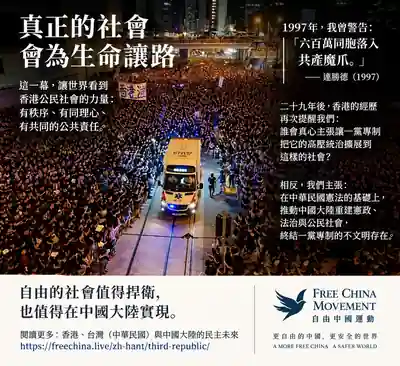
The anti-extradition movement brought millions into the streets and was followed by large-scale arrests and prosecutions. The year was an acceleration, not the beginning, of Hong Kong’s erosion of freedom. Many later political-prisoner cases, organizations, court proceedings and restrictions on public assembly trace directly to the political conflict that intensified in 2019.
What freedom was under pressure: assembly, protest, political participation, press freedom and protection from politically driven prosecution.
2020 — National Security Law imposed
Beijing imposed the Hong Kong National Security Law in June 2020. The law created new national-security offenses and a legal framework soon used against prominent democracy activists, media figures, organizers and civil-society institutions.
What changed: national-security prosecutions became a central instrument of political control; the legal risks of peaceful organizing, speech and association expanded sharply.
Representative tracked case: Jimmy Lai (黎智英) · Media Archive
2021 — Imprisonment, organizational collapse and the criminalization of remembrance
By 2021, the effects of the new national-security order were visible across politics, media and civil society. The closure of Apple Daily, arrests and prosecutions of democracy figures, and pressure on the Hong Kong Alliance and June Fourth remembrance marked a decisive contraction of public space.
Representative tracked cases: Chow Hang-tung (鄒幸彤) · Media Archive; Lee Cheuk-yan (李卓人) · Media Archive; Albert Ho (何俊仁) · Media Archive.
What freedom was under pressure: historical memory, peaceful assembly, association, press freedom and the ability of civic organizations to continue operating.
2022 — Long detention becomes part of the punishment
Many national-security defendants remained in lengthy pretrial detention or continued serving sentences from protest-related cases while facing additional proceedings. The practical meaning of political prosecution increasingly included years of confinement before final resolution of all charges.
What freedom was under pressure: due process, liberty before trial, legal defense and the ability of opposition figures to remain active in public life.
2023 — Repression extends beyond prison walls
Hong Kong’s national-security system increasingly reached beyond courtroom convictions. Overseas activists faced warrants and bounties, while people and organizations inside Hong Kong faced continuing pressure over association, speech and contact with international groups.
What freedom was under pressure: speech, association, international advocacy and the security of Hong Kong activists living abroad.
2024 — Article 23 legislation deepens the national-security system
The Safeguarding National Security Ordinance, enacted under Article 23 of the Basic Law, added another layer to Hong Kong’s national-security framework. The legal environment for journalism, advocacy, civil society and political organization became still more restrictive.
What freedom was under pressure: expression, press freedom, association, access to information and political organizing.
2025 — Political trials and restrictions become normalized
By 2025, prolonged national-security proceedings, professional consequences, surveillance, restrictions after release and the continuing incarceration of major democracy figures had become part of Hong Kong’s ordinary political landscape rather than exceptional events.
What freedom was under pressure: independent political participation, professional freedom, legal advocacy and meaningful opposition activity.
2026 — Sentences, imprisonment and the battle over conscience and memory
Free China coverage in 2026 documents a further hardening of the system: major democracy and June Fourth figures remained imprisoned or faced new sentences, while remembrance itself continued to be treated as a national-security issue.
- Chow Hang-tung (鄒幸彤), Lee Cheuk-yan (李卓人) and Albert Ho (何俊仁): sentenced September 11, 2026 to 7 years 3 months, 7 years, and 5 years 2 months respectively in the Hong Kong Alliance national-security case. Chow media archive · Lee media archive · Ho media archive · FCM press release · Rapid Response · Editorial.
- Chow Hang-tung (鄒幸彤): Five Years After Chow Hang-tung’s Arrest · FCM statement calling for her release.
- Jimmy Lai (黎智英): Jimmy Lai’s 20-year sentence and renewed appeal for release · Rapid Response · FCM Statement.
- Joshua Wong (黃之鋒): Profile & current-status archive · FCM statement on his guilty plea · Freedom House release campaign coverage.
- Prince Edward remembrance cases: FCM press release on arrests over remembrance.
What this timeline is meant to show
The purpose is not merely to count prisoners. It is to show the relationship between individual cases and the deterioration of freedoms over time. A political-prisoner record should therefore answer two questions together: what happened to the person, and what freedom disappeared or became more dangerous for everyone else?
The timeline will continue to expand with verified sentencing dates, release dates, post-release restrictions, profile pages, media archives, legal records and links to related reporting.
Last updated: September 13, 2026.
612 Humanitarian Relief Fund: The September 2026 appeal record concerns Societies Ordinance registration convictions and fines. Those convictions should not be treated as proof of current imprisonment. Read the verified case update.