Category: Analysis & Commentary

FCM analysis, commentary, explainers, and interpretation of developments affecting democracy, human rights, governance, and China’s political future.

  • 台湾副总统萧美琴赴意大利参加民主论坛,凸显欧洲民主交流空间

    中华民国在台湾副总统萧美琴9月11日赴意大利参加文托泰内自由与民主会议,并与外交部长林佳龙同行。路透社报道,北京已就此向意大利和欧盟提出抗议。

    意大利与台湾没有正式外交关系,意大利外长安东尼奥·塔亚尼没有安排与萧美琴会面。欧洲议会副议长皮娜·皮切尔诺表示,萧美琴出席的消息一度未公开,以减少来自北京的压力。

    为何重要

    这次访问并不等于意大利对台湾的外交承认。其意义在于,即使没有正式外交关系,台湾民选领导人仍能参与欧洲民主网络与政策交流。大陆中共政权持续试图限制台湾的国际参与,而欧洲民主人士是否愿意保持直接交流,正成为观察台湾国际空间的重要指标。

    来源

  • 國家安全不是政黨安全:香港支聯會案重判不能以『其他國家也有國安法』辯護

    2026年9月11日|香港

    香港法院今日就已解散的香港市民支援愛國民主運動聯合會案件判刑:Chow Hang-tung(鄒幸彤)被判監7年3個月,Lee Cheuk-yan(李卓人)被判7年,Albert Ho(何俊仁)被判5年2個月;支聯會被罰款150萬港元。三人此前被裁定煽動顛覆國家政權罪成立。

    本案最值得追問的,不是世界上其他國家是否也有國家安全法律。答案當然是有。真正的問題是:國家安全法保護的是國家及人民免受間諜、恐怖活動、暴力或其他實質安全威脅,還是保護一個政黨永遠不能被人民和平取代?

    「其他國家也有國安法」並不能回答本案

    把所有名為「國家安全法」的法律放在一起比較名稱,並不能證明它們限制政治言論的範圍相同。判斷一部法律是否被用來壓制政治自由,必須看它究竟處罰甚麼行為、需要甚麼證據,以及人民是否仍能和平主張更換政府或執政黨。

    支聯會多年提出「結束一黨專政」的政治主張。根據公開報道,控方與法院把這一主張視為證明顛覆意圖的重要內容。辯方則否認支聯會要求任何人採取非法手段;Lee Cheuk-yan 對這項主張的解釋,是讓人民決定由誰領導他們。

    這正是本案無法被「別國也有國安法」一句話帶過的地方。民主制度的基本特徵之一,就是執政黨可以經由和平政治程序失去權力。要求一個政黨結束壟斷政權,與要求摧毀一個國家,並不是同一件事。

    國家不等於政府,政府不等於政黨,政黨更不等於國家。

    和平政治主張與真正的安全威脅必須區分

    公開報道指出,本案並沒有以暴力作為支聯會政治主張的實施方式。法院仍把案件列為嚴重情節,並判處多年監禁。這使案件的核心問題更加清楚:當和平倡議改變政治制度本身即可被解讀為顛覆時,「國家安全」的邊界已經延伸到對政治制度與執政黨的根本批評。

    任何政府都有責任防止真正危害國家安全的行為。然而,國家安全不能成為取消和平政治選擇的同義詞。人民是否可以公開批評執政黨、要求制度改革,甚至主張透過和平方式結束一黨統治,是衡量政治自由是否仍然存在的重要標準。

    今天的判刑也是香港自由變化的一個歷史節點

    支聯會曾經連續多年在香港舉辦六四燭光悼念。這些公開紀念活動一度是香港與中國大陸政治環境最鮮明的差異之一。今天,曾經組織這些紀念活動並公開倡議民主改革的人士,因國安法案件面臨五年至七年以上的刑期。

    因此,本案不應只被記錄為三個人的刑期。它同時提出一個更根本的法治問題:法律是在保護國家免受真正的安全威脅,還是在保護掌權政黨免受和平政治挑戰?

    其他民主國家存在國家安全法律,並不能消除這個問題,更不能自動證明香港國安法在本案中的適用合理。真正有意義的比較,應當比較被禁止的具體行為、司法保障、政治權利,以及公民能否在不受刑事懲罰的情況下和平主張更換執政者。

    Free China 結論:國家安全值得依法保護;但國家安全不是政黨安全。和平紀念六四、倡議民主以及要求結束一黨統治,不應因為挑戰執政黨的政治地位而被等同於危害國家本身。


    資料來源: Reuters、Associated Press 2026年9月11日關於香港支聯會國安法案件判刑的報道。本文的評論與判斷由 Free China 編輯部負責。

  • Hong Kong’s Financial Rebound Does Not Erase Its Political Transformation

    Hong Kong is drawing finance professionals back as its IPO and wealth-management businesses strengthen, according to Reuters reporting published September 11. The rebound is economically significant, but it should not be mistaken for a reversal of the territory’s political transformation under Beijing’s national-security framework.

    Reuters reports that total funds raised, including IPOs, reached roughly $83.5 billion in the first eight months of 2026, up 76% from a year earlier. More than 400 companies established or expanded Hong Kong operations in the first half of the year, with InvestHK expecting more than HK$53 billion in foreign direct investment and over 8,600 jobs. Demand for prime Central office space has also improved.

    Two developments can be true at once

    Hong Kong can remain a highly competitive financial center while political freedoms narrow. Capital markets respond to liquidity, tax policy, access to mainland Chinese business, legal infrastructure and investor opportunity. Political freedom depends on different institutions: freedom of expression, association, assembly, press freedom, judicial independence and the ability to organize opposition.

    The financial rebound therefore should be measured on its own terms rather than used as proof that concerns over Hong Kong’s civic and political environment have disappeared. Reuters itself notes that the city professionals are returning to is structurally different from the one many left after 2019, with the national security law now part of the operating environment.

    What to watch

    Future analysis should track whether Hong Kong can sustain international financial confidence while preserving predictable law, transparent regulation and protections for speech, journalism and civil society. Economic vitality and political openness are not interchangeable measures of institutional health.

    Source

  • Russian Film Screening in Taipei Raises Concern Over China-Russia Historical Narrative Campaign

    A small Russian-organized screening in Taipei of an 81-year-old Soviet documentary about the defeat of Imperial Japan has drawn concern from Taiwan officials, who see it as part of a broader China-Russia effort to shape public understanding of World War II and Japan’s current security role.

    Reuters reported on September 11 that the private event, attended by about 20 people, was organized by Russia’s de facto embassy in Taiwan. Taiwan officials said they were monitoring what they regard as coordinated narrative activity portraying Japan as a renewed military threat and seeking to weaken Taiwan’s relationships with Japan and other democratic partners.

    The historical dispute

    The historical record is politically contested. Soviet forces entered the war against Japan only in its final weeks in 1945. After Japan’s surrender, the Soviet Union later transferred substantial captured Japanese weapons to Mao Zedong’s communist forces during the Chinese civil war.

    The Republic of China, then China’s internationally recognized government, had fought Japan since the 1930s and accepted Japan’s surrender in China in 1945. Beijing’s later Communist government was established in 1949. Free China Movement therefore distinguishes the wartime role of the Republic of China from later political narratives that retroactively center the Chinese Communist Party as the principal victor over Japan.

    Why it matters

    Historical memory can become an instrument of contemporary foreign policy. Democracies should answer contested historical claims with open archives, transparent scholarship and access to primary evidence rather than censorship or counter-propaganda.

    Sources

  • Taiwan Vice President Hsiao Bi-khim Makes Rare Italy Visit for Democracy Forum

    Taiwan Vice President Hsiao Bi-khim is making a rare high-level visit to Europe, attending the Ventotene Conference for Freedom and Democracy in Italy with Foreign Minister Lin Chia-lung, Taiwan’s presidential office said on September 11.

    Reuters reported that Beijing protested the visit to both Italy and the European Union. Italy has no formal diplomatic relations with Taiwan, and Italian Foreign Minister Antonio Tajani is not scheduled to meet Hsiao. Pina Picierno, a vice-president of the European Parliament, said Hsiao’s attendance had initially been kept quiet because of concern over pressure from Beijing.

    Why it matters

    The visit illustrates the widening space for democratic engagement between the Republic of China in Taiwan and European political networks even where formal diplomatic recognition is absent. It also shows the continuing tension between Beijing’s efforts to restrict Taiwan’s international participation and the willingness of European democratic actors to engage senior Taiwanese officials.

    Hsiao’s presence should not be described as Italian diplomatic recognition of Taiwan. The significance lies instead in political access, democratic-network participation and the ability of Taiwan’s elected leaders to engage abroad despite pressure from the Mainland Chinese Communist Government.

    Source

  • 社论:当法律惩罚良知——为什么正义可以高于不义之法

    邹幸彤李卓人何俊仁的判刑,表面上涉及香港、六四和国安法,但也提出一个更古老、更困难的问题:当法律与正义分离时,会发生什么?

    法律制度之所以值得尊重,并不是因为政府写下的每一条规则都自动正义,而是因为法律本应限制权力、保护弱者、确立可预期的权利,并把统治者置于不能任意改写的规则之下。当政治权力可以把和平纪念、民主倡议或历史真相定义成危害国家的犯罪时,仅有“合法”并不足以回答道德问题。

    在中文政治与道德语境中,这一区分可以用义大于法表达:正义、良知和道德责任可以高于不义之法。

    三项判刑,三种勇气

    路透社美联社报道,邹幸彤被判7年3个月,李卓人7年,何俊仁5年2个月。法院认定他们通过支联会的领导与倡议构成煽动颠覆。支联会数十年来主办香港六四烛光晚会。

    邹幸彤代表良知:拒绝让刑罚重新定义自己的基本信念。李卓人代表记忆:在强大机构希望沉默时,坚持让六四留在公共生活中。何俊仁代表承受压力的法律:一名律师和长期公共人物,面对一个法律框架越来越运行在国家设定的政治边界之内的制度。

    因此,这些判刑不能只被理解成几年刑期,而是关于法律与服从之间的界线。

    当政党凌驾法律之上

    中国维权律师对此并不陌生。709大抓捕前后遭打压的律师,一直试图用法律条文、程序、证据和法院保护被告。但如果执政党最终决定哪些言论危险、哪些被告政治上不可接受、哪些结果可以被允许,那么法律就不再是独立的盾牌。

    形式仍然存在:法律、起诉、法官、庭审和判决。被削弱的是“法律可以从外部约束政治权力”的原则。

    良知不是法律的敌人

    说正义可以高于不义之法,并不是赞美无法无天,恰恰相反。持久的宪政秩序依赖更深层的道德基础:人的尊严、法律面前人人平等、良心自由、公共机构的诚实以及对政府权力的限制。

    当这些基础消失时,“合法”本身就可能成为强制的词汇。

    六四为何如此关键

    香港的六四烛光晚会远远超出一年一次的集会。它保存了在中国大陆无法公开保存的一段历史记忆。几十年来,成千上万人可以手持蜡烛,悼念1989年北京镇压中的死难者。这种空间如今大幅收缩。

    “Freedom is not free”

    华盛顿韩战老兵纪念碑上的“Freedom is not free”之所以反复被引用,是因为它提醒人们:权利之所以存在,是因为有人愿意为之付出代价。政治犯把这种代价具体化。

    自由中国必须让法律服从正义

    我们所主张的未来中国,不应以另一种任意权力取代现有权力,而应建立一个没有政党、领导人或运动凌驾法律之上的制度。这需要独立法院、可执行的宪法权利、开放的历史档案、言论与结社自由以及政治权力的和平交接。

    “中国的未来不能建立在恐惧或报复之上,而必须建立在真相、宪政、平等权利和政治权力和平交接之上。”——连胜德

    全文:和平追求民主不是颠覆,纪念六四不是犯罪

    义大于法的意义不是抛弃法律,而是法律如果要配得上服从,就必须接受正义的检验。

    自由中国运动社论立场。

  • Editorial: When the Law Punishes Conscience — Why Justice Can Stand Above Unjust Law

    The prison terms handed to Chow Hang-tung, Lee Cheuk-yan and Albert Ho are about Hong Kong, June Fourth and the National Security Law. But they also raise an older and more difficult question: what happens when law and justice separate?

    A legal system deserves respect not because every rule written by a government is automatically just, but because law is supposed to restrain power, protect the weak, establish predictable rights and place rulers under rules they cannot rewrite at will. When political authority can define peaceful remembrance, democratic advocacy or historical truth as crimes against the state, legality alone is no longer enough to settle the moral question.

    In Chinese political and moral language, one way to express that distinction is 义大于法: justice, conscience and moral obligation can stand above an unjust law.

    Three sentences, three forms of courage

    According to Reuters and Associated Press, Chow was sentenced to 7 years and 3 months, Lee to 7 years, and Ho to 5 years and 2 months after the court found their leadership and advocacy through the Hong Kong Alliance amounted to inciting subversion. The Alliance had organized Hong Kong’s annual June Fourth candlelight vigils for decades.

    Each of the three represents something different. Chow represents conscience: the refusal to let criminal punishment redefine one’s deepest convictions. Lee represents memory: the persistence required to keep June Fourth in public life when powerful institutions prefer silence. Albert Ho represents law itself under pressure: a lawyer and longtime public figure confronting a system in which the legal framework increasingly operates inside political limits set by the state.

    That is why these sentences cannot be understood only as numbers of years. They concern the boundary between law and obedience.

    When a party stands above law

    The problem is familiar to Chinese rights lawyers. The lawyers targeted in and after the 709 crackdown repeatedly tried to do something very ordinary in principle: use statutes, procedure, evidence and the courts to protect defendants. Their work illustrated a structural contradiction. A lawyer can invoke every provision available, but if the ruling party ultimately decides which speech is dangerous, which defendant is politically unacceptable and which outcome is permitted, then law ceases to be an independent shield.

    The forms are still there: statutes, indictments, judges, hearings and judgments. What is weakened is the idea that law can bind political power from the outside.

    That distinction matters because authoritarian systems also use laws. The existence of a statute does not answer whether the statute is just, whether its application is proportionate, or whether citizens retain rights the state may not extinguish.

    Conscience is not the enemy of law

    To say that justice can stand above unjust law is not to celebrate lawlessness. It is the opposite. A durable constitutional order depends on a deeper moral foundation: human dignity, equality before the law, freedom of conscience, truthfulness in public institutions and limits on government power.

    When those foundations disappear, legality can become a vocabulary for coercion.

    Chow’s position, as reported after sentencing, captures this conflict with unusual clarity: she has maintained her democratic convictions even when the law defines them as criminal. Her choice does not mean that conscience can excuse every act. It means that peaceful belief and remembrance cannot be transformed into moral wrongdoing simply because political authority has attached a criminal label to them.

    June Fourth is why this matters so much

    Hong Kong’s June Fourth vigils carried meaning far beyond one annual gathering. They preserved a public historical memory unavailable in mainland China. For decades, tens of thousands could gather with candles and remember people killed in Beijing in 1989. The vigil represented an unwritten promise that some truths could still be spoken publicly in Hong Kong.

    That space has now contracted dramatically. The sentencing of former Alliance leaders therefore does more than punish three individuals. It tells an entire society that remembrance itself can carry criminal risk when remembrance leads to political judgment.

    Our longer background coverage of Chow’s case is here: Five Years After Chow Hang-tung’s Arrest, Her Case Remains a Test of Hong Kong’s Freedom to Remember June Fourth.

    “Freedom is not free”

    The phrase engraved at the Korean War Veterans Memorial in Washington — “Freedom is not free” — is often repeated because it states something democracies sometimes forget. Rights survive because people are willing to bear costs for them.

    Political prisoners make that cost visible. They lose years with their families, professional lives, health, privacy and freedom because they refuse to pretend that what they believe is false.

    That sacrifice should not be romanticized. Prison is not an abstraction. But neither should it be stripped of meaning. The courage of people such as Chow, Lee and Ho shows that political power does not gain moral authority merely because it can impose punishment.

    A Free China must put law under justice

    The future China we advocate should not replace one arbitrary power with another. It should build institutions in which law serves justice precisely because no party, leader or movement is above it.

    That requires independent courts, enforceable constitutional rights, open historical archives, freedom of expression and association, and peaceful transfer of political power. It requires legal rules that protect opponents as well as supporters.

    In an earlier Free China Movement statement, co-founder Lian Shengde put the principle this way:

    “China’s future must not be built on fear or revenge. It must be built on truth, constitutional government, equal rights, and the peaceful transfer of political power.”

    That full statement is available here: Peacefully Seeking Democracy Is Not Subversion. Remembering June Fourth Is Not a Crime.

    The point of 义大于法 is therefore not that law should be discarded. It is that law must answer to justice if it is to deserve obedience. A government can imprison people who remember June Fourth. It can label democratic advocacy subversion. It can sentence conscience. But it cannot, by those acts alone, make injustice just.

    Editorial position of the Free China Movement.

    Sources and related reading
  • Editorial: Huang Xueqin Should Leave Prison to a World That Has Not Forgotten Her

    September 10, 2026

    For almost five years, a prison has separated investigative journalist Huang Xueqin (黄雪琴) from the work that made her important. But imprisonment cannot erase what that work represented.

    Huang belonged to a tradition of journalism increasingly endangered in mainland China: journalism that begins not with what authorities want people to believe, but with questions. What happened? Who was harmed? Why did it happen? Who bears responsibility?

    Those questions took Huang toward subjects powerful institutions often preferred not to discuss, including sexual harassment, women’s rights and other social problems. Eventually, asking questions carried an extraordinary price.

    As the expected completion of Huang’s sentence approaches, the international community should do more than wait silently for a prison gate to open. Journalists should tell her story. Women’s organizations should remember her contribution to China’s #MeToo movement. Universities and journalism schools should discuss what her imprisonment tells us about investigative reporting under authoritarian government. Human-rights organizations should monitor what happens after the scheduled end of her sentence.

    Freedom does not mean leaving prison only to encounter arbitrary confinement or forced silence outside its walls.

    When Huang is genuinely free, the world should celebrate the principles her work represents: the right to ask questions, the right to investigate power, the right of women to speak about abuse, and the principle that discovering and reporting truth is not a crime.

    Her courage deserves remembrance, and her pursuit of truth should outlive the repression intended to silence it.

  • Wang Xizhe Heads Toward Hong Kong in a Deliberate Challenge to Political Repression

    September 9, 2026 — Washington, D.C.

    Veteran Chinese democracy advocate Wang Xizhe has publicly declared that he is traveling toward Hong Kong in a deliberate challenge to political prosecution. Wang says he intends to present himself to Hong Kong authorities following the conviction of Lee Cheuk-yan.

    The trip comes after Beijing imposed the National Security Law on Hong Kong in 2020 and amid prosecutions of prominent democracy advocates including Jimmy Lai, Joshua Wong, Chow Hang-tung, Lee Cheuk-yan and Albert Ho. On August 21, 2026, Hong Kong’s High Court convicted Lee and Chow of inciting subversion; Ho had earlier pleaded guilty in the same case.

    For the Free China Movement, the episode has a painful historical parallel. Wang Xizhe served in the founding-era leadership of the Free China Movement in 1998. Dr. Wang Bingzhang, another founding FCM leader, disappeared during a 2002 trip to Vietnam. FCM said at the time that it believed Chinese agents abducted him inside Vietnam and forced him into China. He was later tried behind closed doors in Shenzhen and sentenced to life imprisonment on espionage and terrorism charges that FCM publicly described as trumped up.

    Lian Shengde, co-founder of the Free China Movement, said:

    I call on the international community, democratic governments, human-rights organizations and the global media to watch closely how Hong Kong authorities handle Wang Xizhe’s case. His safety must be protected. The world should make clear, through sustained international scrutiny and pressure, that he must not be subjected to secret detention, disappearance, coercion or political retaliation for peacefully challenging the erosion of Hong Kong’s freedoms. What happens to Wang Xizhe will be a test of how far Hong Kong’s promised autonomy and rule of law have deteriorated.

    We remember what happened to Wang Bingzhang. We cannot wait until another Chinese democracy advocate disappears into custody before the world begins asking questions. Wang Xizhe is making his protest openly. The response of the Hong Kong authorities must therefore also be visible to the world.

    As of publication, FCM has not independently confirmed whether Wang Xizhe has been admitted to Hong Kong, detained, questioned, removed, or remains in transit. That uncertainty is precisely why immediate public scrutiny matters.

    Sources

    Wang Xizhe public statement: https://beijingspring.com/phon/archives/11599
    Hong Kong Government verdict: https://www.news.gov.hk/chi/2026/08/20260821/20260821_130443_331.html
    Tom Lantos Human Rights Commission, Wang Bingzhang: https://humanrightscommission.house.gov/DFP/Countries/China/Wang-Bingzhang

  • Editorial: Fifty Years After Mao — China Needs Truth, Accountability and a Memorial to the Victims

    Editorial: Fifty Years After Mao — China Needs Truth, Accountability and a Memorial to the Victims

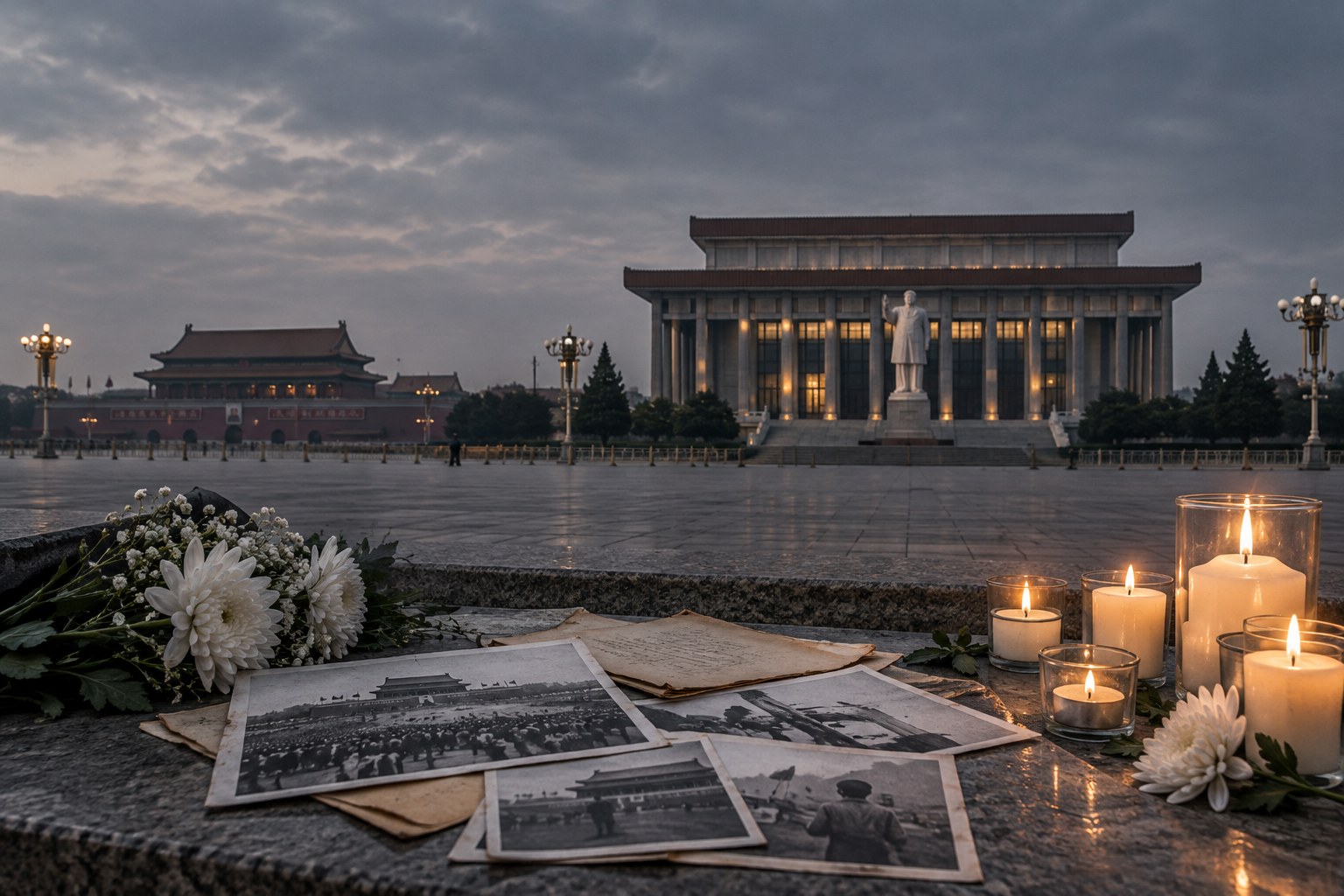
    Historical accountability illustration for the 50th anniversary of Mao Zedong’s death
    Fifty years after Mao’s death, historical memory must center victims, evidence and accountability.

    September 9, 2026 — The fiftieth anniversary of Mao Zedong’s death should not be treated merely as an anniversary of a former ruler. It should be a national reckoning with the enormous human cost of political campaigns carried out under his leadership and with the institutions and political habits that survived him.

    The Great Leap Forward and ensuing famine killed millions. The Anti-Rightist Campaign destroyed careers, families and lives. The Cultural Revolution brought political persecution, torture, imprisonment, public humiliation, factional violence, killings and the destruction of cultural and educational institutions. The central historical question is therefore not whether Mao remains symbolically important, but why the public memory of these catastrophes remains constrained while his state-sponsored veneration continues.

    Victims and resisters must be at the center

    A truthful national history must honor those who resisted persecution: citizens, intellectuals, workers, students, officials, writers, religious believers, dissidents and families who defended independent thought, protected victims, preserved records, challenged political violence or refused to participate in persecution. Their testimony, diaries, petitions, underground publications, photographs and local records should be preserved as part of China’s national memory.

    Those acts of conscience matter because Mao-era repression depended not only on directives from the top, but on institutions and networks of enforcement. Historical accountability should identify, on evidence, those who designed, enabled, administered or concealed abuses, while distinguishing policy-makers and active perpetrators from coerced participants, bystanders and people who tried to protect others.

    The legacy did not end in 1976

    The Free China Movement argues that Mao’s political legacy did not disappear with his death. Censorship, political conformity, repression of dissent, personality-centered rule and concentration of unchecked power persisted in different forms in mainland China. Later leaders and institutions that preserved or revived such practices should be examined openly and judged by the same standards of evidence and individual responsibility.

    That is not collective condemnation of generations of Chinese people. It is a demand that no institution or political leader be exempt from scrutiny merely because the ruling system treats parts of its own history as politically untouchable.

    Transform the Mao Memorial Hall

    For that reason, the Free China Movement supports transforming the Chairman Mao Memorial Hall in Tiananmen Square from a site of political veneration into a Hall of Shame and Historical Horror dedicated to the victims of Mao-era famine, forced labor, political campaigns and political violence.

    The transformed institution should contain a national victims’ memorial, a Great Leap Forward and famine archive, a Cultural Revolution museum, an archive of resistance and conscience, an accountability archive examining decision-making and institutional responsibility, and open access for researchers and victims’ families.

    This proposal is not about erasing Mao from history. It is about ending the privilege of a state-sponsored personality cult and replacing it with evidence, testimony, remembrance and accountability.

    A democratic standard for historical reckoning

    A future democratic China should not replace one compulsory historical narrative with another. It should protect evidence, permit peaceful disagreement and ensure that no government can punish historical inquiry or suppress victims’ testimony. The purpose of accountability should be truth, individual responsibility based on evidence, institutional reform and safeguards against recurrence — not collective punishment.

    Fifty years after Mao’s death, the victims deserve more than silence. Those who resisted persecution deserve recognition. Those who enabled grave abuses should be subject to historical scrutiny. And the political practices inherited from Maoism should no longer be insulated from open public judgment.

    Sources